1-3
| 1 | |
| What does fuel-efficient driving achieve? | |
| | Increased fuel consumption |
| | Improved road safety |
| | Damage to the environment |
| | Increased exhaust emissions |
| 2 | |
| The fluid level in your battery is low. What fluid should you use to top it up? | |
| | Battery acid |
| | Distilled water |
| | Engine oil |
| | Engine coolant |
| 3 | |
| What can you expect if you drive using rapid acceleration and heavy braking? | |
| | Reduced pollution |
| | Increased fuel consumption |
| | Reduced exhaust emissions |
| | Increased road safety |
4-6
| 4 | |
| What should you do when leaving your vehicle parked and unattended? | |
| | Park near a busy junction |
| | Park in a housing estate |
| | Lock it and remove the key |
| | Leave the left indicator on |
| 5 | |
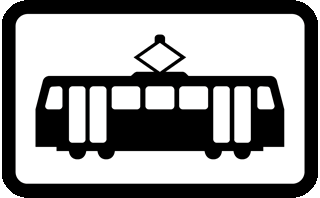
| What makes the vehicle in the picture ‘environmentally friendly‘? | |
| | It’s powered by gravity |
| | It’s powered by diesel |
| | It’s powered by electricity |
| | It’s powered by unleaded petrol |
 | |
| 6 | |
| When may a passenger travel in a car without wearing a seat belt? | |
| | When they’re under 14 years old |
| | When they’re under 1.5 metres (5 feet) in height |
| | When they’re sitting in the rear seat |
| | When they’re exempt for medical reasons |